
When to book the first visit
Many parents ask us this, often just after they spot a first tiny tooth. A common guideline in Canada is a first visit within six months of that first tooth, or by about the first birthday.
That may seem young for a child with only a few teeth. At that age the visit is short. We check that the teeth are coming in well and give you tips that suit your child's age. It also lets your child meet us before there is a problem to fix.
Why baby teeth matter
Baby teeth fall out, so it is easy to think they matter less. Yet some back baby teeth stay until about age 10 to 12. They hold space for the adult teeth and help your child chew and speak.
A cavity in a baby tooth can still hurt and lead to infection. Decay is common in young children and often starts where parents cannot easily see it, such as between the back teeth. Finding it early usually means a smaller fix, such as a small filling.
What happens at the first visit
This first check-up is usually short and gentle. A baby or toddler may sit on your lap, facing you, while we lean them back so their head rests in our lap. Your child can see you the whole time, and we can see their teeth.
We count the teeth, look at the gums and check how the bite is forming. If your child is comfortable, we may brush the teeth and talk with you about fluoride. We usually do not need X-rays at this age.
If you have questions about thumb sucking, a soother or teething, this is a good time to ask.
Crying is normal for little ones and does not mean the visit went badly. Many young children cry in a new place with new faces. We go at your child's pace. You can read more about our children's dentistry before you come.
How to help your child feel ready
A little preparation at home can make the day easier for both of you:
- Book a time when your child is usually rested, such as the morning or after a nap.
- Talk about the visit in calm, cheerful words, like "we will count your teeth." Words like "hurt" or "needle" can make a child worry before anything has happened.
- Read a picture book about visiting the dentist, or play pretend by counting a stuffed toy's teeth.
- Bring a favourite toy or blanket for comfort.
Children notice how their parents feel. If you feel nervous about the dentist yourself, that is common, and you can tell us before the visit. Our what to expect page also walks you through a visit at our office.
Caring for little teeth at home
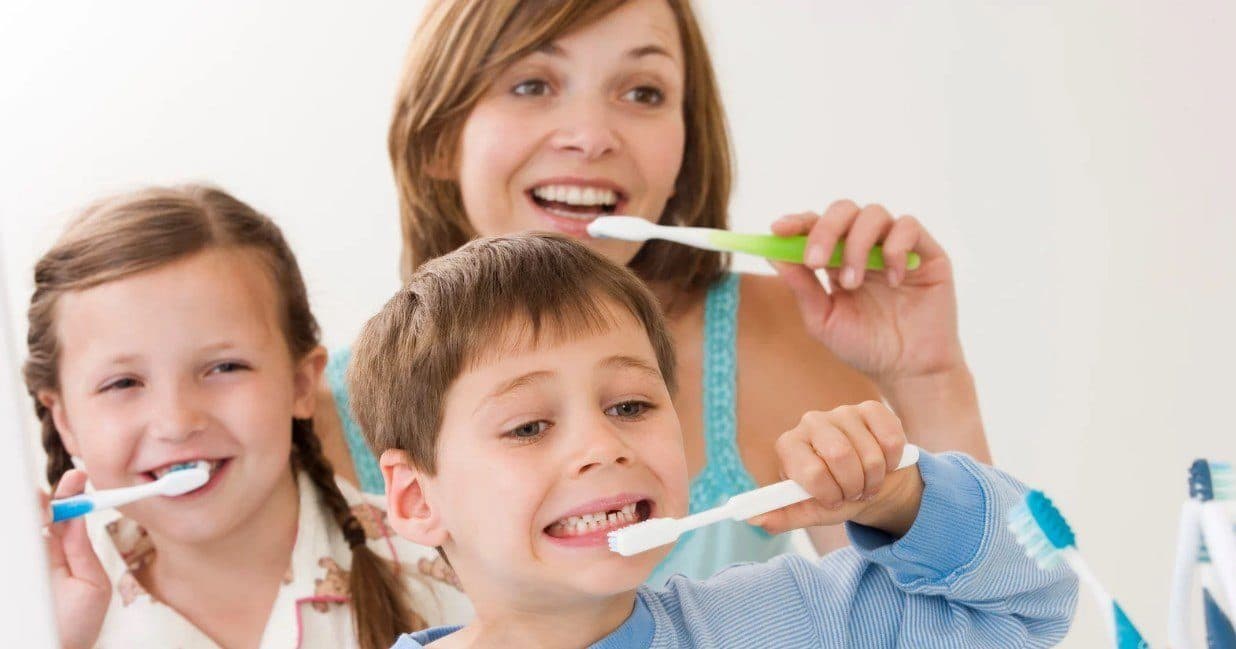
You can start before the first tooth appears by wiping your baby's gums with a soft, damp cloth after feeds. Once teeth come in, brush them twice a day with a small, soft toothbrush.
After the first visit, we suggest how often your child should come back for a check-up and cleaning, based on their needs.
- Under age 3: ask us whether fluoride toothpaste suits your child. If it does, use a smear about the size of a grain of rice.
- Ages 3 to 6: use a pea-sized amount of fluoride toothpaste and help your child spit it out.
- Try not to put your child to bed with a bottle of milk or juice. If they need a bottle to settle, water is kinder to their teeth.
- Keep helping with brushing until your child can do it well alone, often around age 7 or 8.
When to call sooner
Please call us soon if you notice white or brown spots on the teeth, a tooth that has turned dark, or your child says a tooth hurts. Toddlers fall a lot, and we can check a bumped or chipped tooth at an emergency visit.
Swelling of the face or jaw with a fever, or any trouble swallowing or breathing, needs urgent care. Take your child to the nearest emergency department or call 911.
If your little one is ready for a first visit, or you have a question first, you can contact us to book. We are at 25 Carlton Street, near College Station, and we would be glad to meet your family.