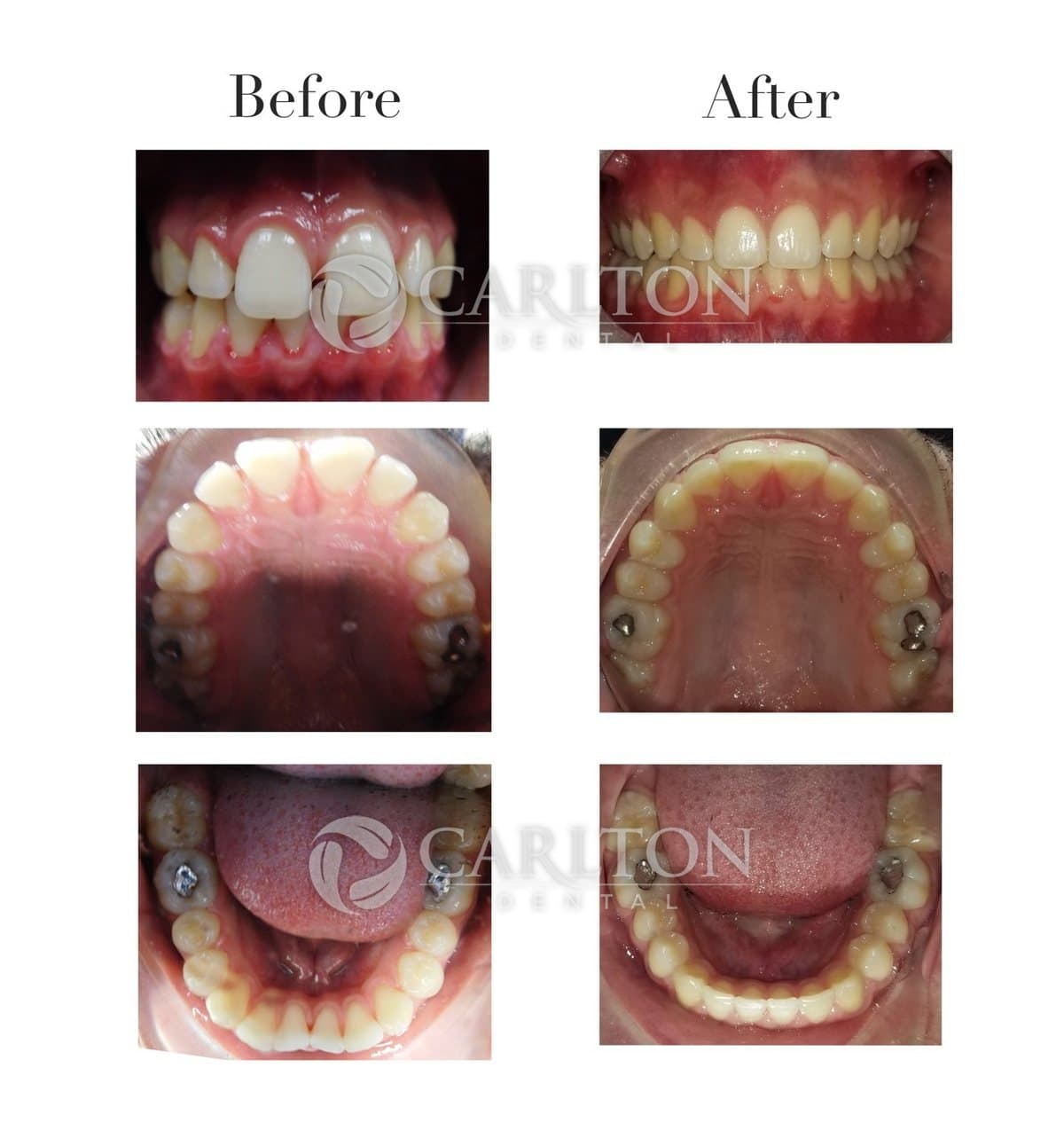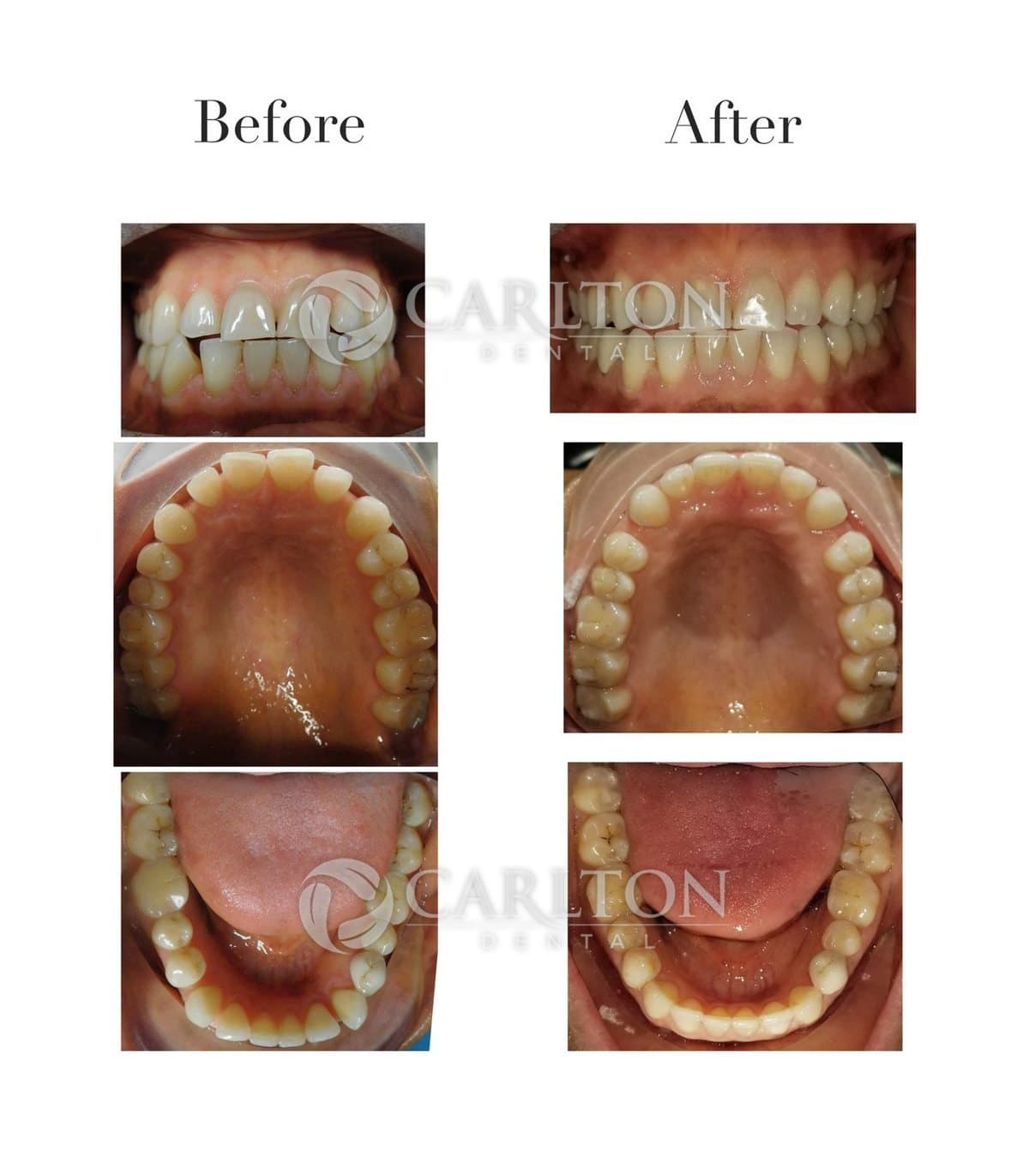
What is Invisalign?
Invisalign is a way to move teeth without metal brackets and wires. You wear a set of clear plastic trays, called aligners. Each tray fits your teeth snugly. Each one is shaped a little differently from the last, so your teeth are nudged along step by step.
To help the trays hold on, we may glue a few tiny bumps to some teeth. They are called attachments, and they are tooth coloured. Most people find the aligners hard to spot, though you may notice them up close.

What can Invisalign fix?
Many people come to us because of a smile they feel shy about. Invisalign is often used for these concerns:
- Crowded teeth that overlap or twist.
- Gaps between teeth.
- Some bite problems, where the top and bottom teeth do not meet well.
It may not suit every case. Teeth that need to move a long way, or certain jaw problems, may be better treated with braces or by an orthodontist, who is a dentist with extra training in moving teeth. Your dentist can explain which group you may fit in, after a dental examination.
Aligners change where teeth sit. They do not change colour or shape. If those are your concerns, you may want to read about cosmetic dentistry, veneers or teeth whitening.
What are the benefits of Invisalign?
Because you can take the trays out, brushing and flossing usually stay simple. Clean teeth and gums are easier to look after, and that can lower the chance of cavities and gum problems.
- Easy to clean: you remove the trays to brush, floss and eat.
- Hard to notice: the trays are clear.
- No wires: there are no metal pieces to poke your cheeks.
- Fewer surprises: you may see a preview of the planned steps before you begin.
Fixing some bite problems may also ease wear on teeth.
Living with aligners
Aligners work best when you wear them about 20 to 22 hours a day. They come out to eat, to brush and to floss. If you leave them out too long, your teeth may move more slowly.
A new tray often feels snug for a day or two. This is a sign that it is working. You may talk with a slight lisp at first, and it usually fades in a few days. A small case helps keep the trays safe when they are out.
How long does Invisalign take?
It depends on how far your teeth need to move. Each tray is worn for about one to two weeks. Small changes may take several months. Larger ones may take a year or more.
Your dentist can give you an estimate once your plan is made. At the end, you may need a final touch-up round of trays, called a refinement.
What to Expect
- Consultation: your dentist looks at your teeth and gums and talks with you about your goals. Any problems, like cavities, may need care first.
- Records: we make a digital scan or a mould of your teeth. This is used to build a model.
- Treatment plan: your trays are made from the model. We go over the plan with you before you start.
- Wearing the aligners: you switch to a new tray every week or two.
- Check-in visits: short visits so we can see how your teeth are moving and hand you the next trays.
- Retainers: once treatment ends, you wear retainers to help hold your new smile in place.
If you have a question before you book, please contact us.
How much is Invisalign?
At Carlton Dental, Invisalign treatment ranges from about $7,000 to $10,000. It depends on how far the teeth have to move.